
+ Näita rohkem
-
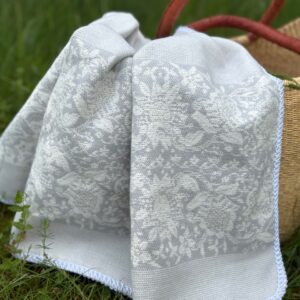
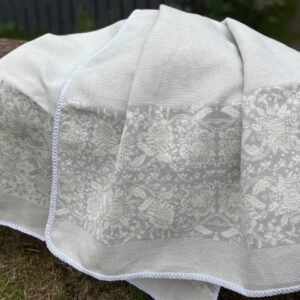
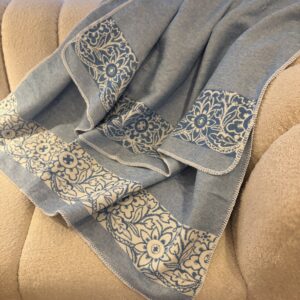
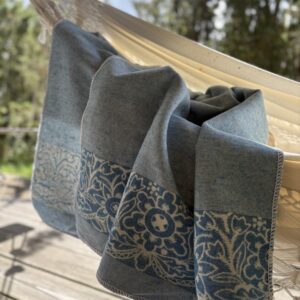
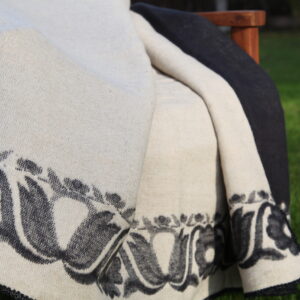
Dimensions 70 x 180 cm 100% cotton In North Estonia, flower pattern was dominant in the first half of the 19th century.It seems strange how colourful, manifold and rich is the art of embroidery in the small territory of Estonia. A good example is the Jõelähtme sleeve pattern used on North Estonian scarf - its pattern is peculiar and diverse.Wrap was being worn lengthways on one’s back; the corners were secured on the breast with a brooch or yarn. The tradition of wearing wraps remained until the beginning of the 19th century.
-
Dimensions 140 x 200 cm 100% cotton In North Estonia, flower pattern was dominant in the first half of the 19th century.It seems strange how colourful, manifold and rich is the art of embroidery in the small territory of Estonia. A good example is the Jõelähtme sleeve pattern used on North Estonian scarf - its pattern is peculiar and diverse.Wrap was being worn lengthways on one’s back; the corners were secured on the breast with a brooch or yarn. The tradition of wearing wraps remained until the beginning of the 19th century.
-
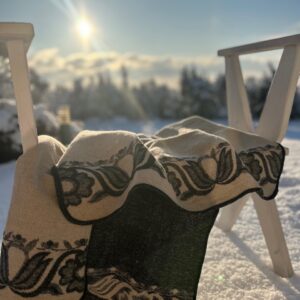
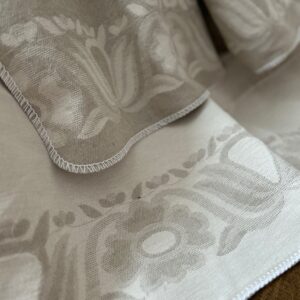
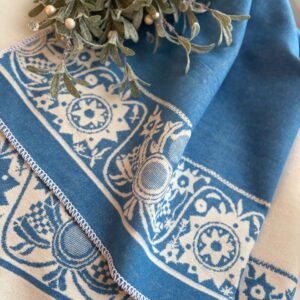
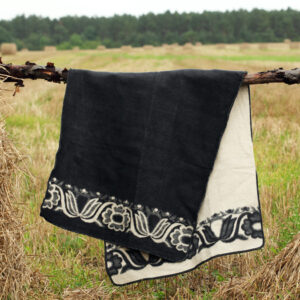
Dimensions 75 x 180 cm 70% cotton, 30% flax On the North Estonian scarf, Maarja sleeve pattern, that is notable for its peculiarity, is used. The yarn that was used was woollen, cotton or silk. Often black and combination of two or three colours was used. The black patterns on the sleeves were silk for the rich and sown for the poor people.Wrap was being worn lengthways on one’s back; the corners were secured on the breast with a brooch or yarn. The tradition of wearing wraps remained until the beginning of the 19th century.
-
Dimensions 145 x 200 cm 70% cotton, 30% flax On the North Estonian scarf, Maarja sleeve pattern, that is notable for its peculiarity, is used. The yarn that was used was woollen, cotton or silk. Often black and combination of two or three colours was used. The black patterns on the sleeves were silk for the rich and sown for the poor people.Wrap was being worn lengthways on one’s back; the corners were secured on the breast with a brooch or yarn. The tradition of wearing wraps remained until the beginning of the 19th century.
-
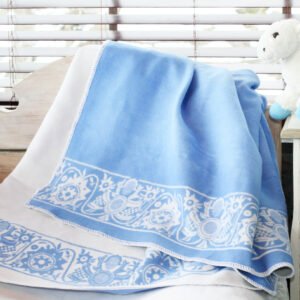
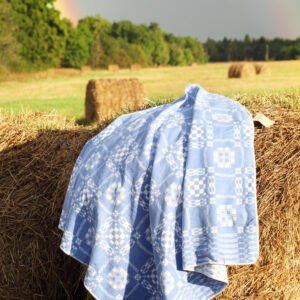
Dimensions 140 x 170 cm 100% cotton In North Estonia, the tradition of wearing wraps remained until the beginning of the 19th century. Wrap was being worn lengthways on one’s back; the corners were secured on the breast with a brooch or yarn.Woven plaids were commonly tartan and in certain colours; white and blue e.g. Blue symbolized the sky and thinking. Special technique was also used to make plaid in checked pattern, depending on the fabric and treading.